Tech Explorer · 5–9 years · in person

LEGO robotics that inspires children to think and create

In weekly robotics classes, children learn the basics of robotics and programming in an engaging, easy-to-understand way. They build exciting robots, test their ideas, develop an understanding of cause and effect and learn a new English word in every class.

  • LEGO Education WeDo, SPIKE and Cubetto equipment
  • Everything needed is provided on site
  • Certified robotics teachers
0classes per year
9learning modules
5–9years old
35–50min per class
a week
0English words per year
Programme content

Nine modulesthat make up the school year

The school year is divided into nine modules that take children from their first introduction to a robot to controlling one on their own. Every class has its own theme, a hands-on task and one new English word, so your child comes home with a concrete result every time.

01

Getting to know the robot

Children get to know the motor, controller, axle and connectors, find parts by following instructions and run their first program. They begin to see that the mechanism and the program work together.

What we build
  • Snail
  • Wind turbine
  • Satellite
  • Drill
English words snail wind space drill
02

Sensors and controlled movement

A sensor spots an obstacle and the robot responds with sound or movement. Children explore how force, balance and construction change the result, and for the first time turn a drawing into a physical object.

What we build
  • Spy
  • Rubber band car
  • Wobbler
  • 3D pens: autumn
English words spy car wobble autumn
03

Exploration and sound

Movement with a purpose: light and sound become the robot's signals. We talk about staying safe near water, on the road and in unfamiliar places, and see how robots help explore hard-to-reach places.

What we build
  • Cave exploration
  • Boat trip
  • Races and speed
  • Mars exploration
English words cave boat speed astronaut
04

Directions and coordinates

Gears make movement slower but stronger. Children plan the robot's route from one point to another, read coordinates on the mat and name the points of the compass.

What we build
  • Grasshopper
  • Christmas tree
  • Natural ecosystem
  • Compass and coordinates
English words grasshopper Christmas tree nature south
05

Programming and creating on my own

Children change the program and the build more independently and test their own ideas. Rotation turns into a hopping movement, and uneven gears bring the model to life.

What we build
  • 3D pens: Latvian holidays or winter
  • Little deer
  • Crazy giraffe
English words winter flag deer giraffe
06

Hitting the target: precision

Changing the numbers in a program changes the result. Children adjust the power and duration of movement, then test, compare and repeat until they hit the target.

What we build
  • Underwater adventure
  • Mini golf
  • 3D pens: Candlemas or Shrovetide
English words submarine golf course candle mask
07

Inventor: finding the best solution

Children compare gear sizes, force and speed, use sensor responses and plan longer sequences of actions in which the robot becomes the hero of a story.

What we build
  • Tractor
  • Spinner
  • Spider
  • Sprīdītis's journey
English words fast slow spin spider adventure
08

Teamwork and balance

The robot needs to move safely and smoothly. Children work in pairs, share parts, explain their solution and present their work creatively.

What we build
  • Little big helper
  • The perfect swing
  • Easter bunny
  • 3D pens: Easter or spring
English words bird swing bunny egg flower
09

Robot control genius

At the end of the year, children bring together everything they have learned: steering, controlling rotation, reading a map, fixing mistakes and demonstrating their solution to others.

What we build
  • Steering
  • Cable train
  • Ferris wheel
  • Captain Cubetto and the treasure map
English words wheel train ride treasure
What your child gains

Skills that last beyond the classroom

The focus isn't on the names of the equipment but on what children learn at each stage. They build, program, test, improve and talk about their solution.

Logical and algorithmic thinking

Plans sequences of actions and sees what happens when the order is wrong.

Programming fundamentals

Creates commands, movement sequences, loops and responses, and fixes mistakes.

Cause, effect and mechanisms

Observes how speed, direction, gears and sensors change the result.

Mathematical thinking

Counts, compares, estimates distance and speed, and uses directions and coordinates.

Fine motor skills and precision

Connects parts, draws 3D lines, and sorts and organises materials.

Spatial thinking

Understands direction, shape, structural stability and how a drawing becomes a 3D object.

Problem solving

Tests, looks for mistakes, changes the solution and tries again.

Collaboration and communication

Names the parts, explains how the robot works and works together with a partner.

Equipment

What children use in LEGO robotics classes

The equipment grows with your child's skills: from the first motors and gears to programming on a tablet. Parents don't need to buy anything; everything is ready in the classroom.

  • LEGO Education WeDoMotors, sensors and gears for building the first moving robots.
  • LEGO Education SPIKE EssentialMore complex models, programmed on a tablet.
  • CubettoA screen-free wooden robot for learning directions, coordinates and sequences.
  • 3D pensA two-dimensional drawing becomes a physical object.
  • Tablets and programming appsEvery child has their own tablet with visual programming.
  • Education Computer Science & AI KitNew this yearIn-depth problem solving and an exciting introduction to science and artificial intelligence.
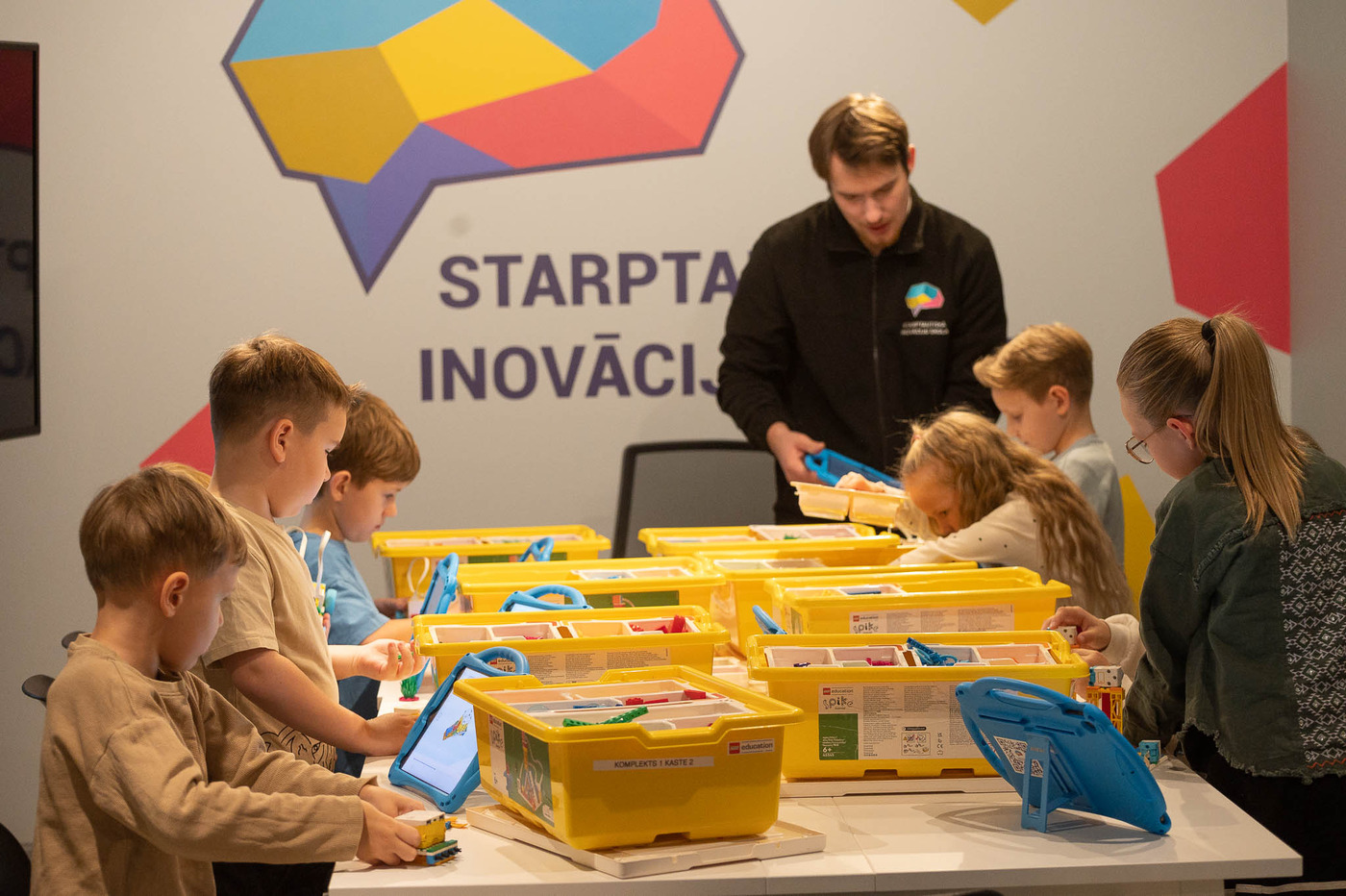
Children in a LEGO robotics class with a teacher
Group class with a teacher
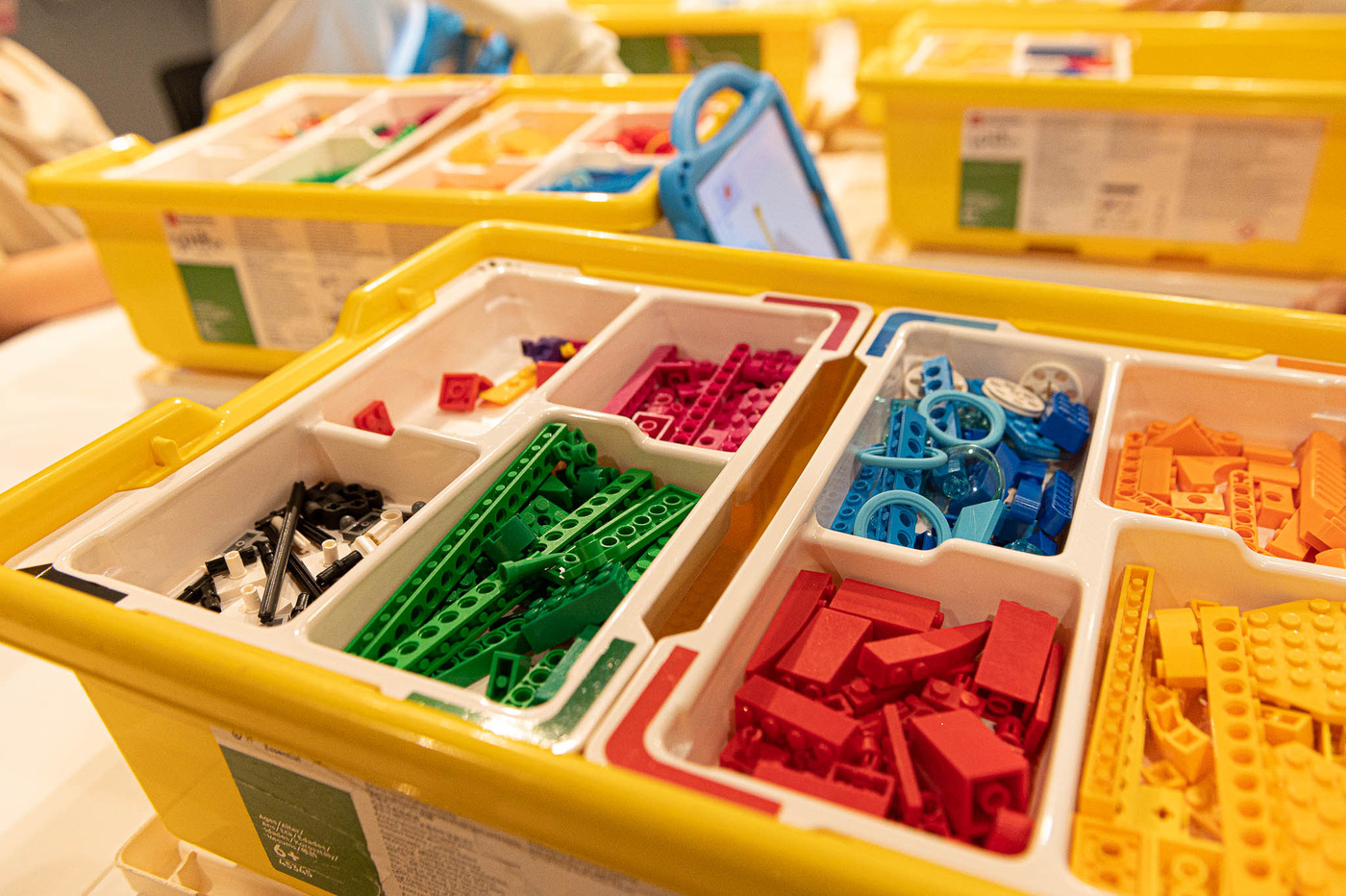
LEGO Education SPIKE Essential sets ready for a class
LEGO Education sets
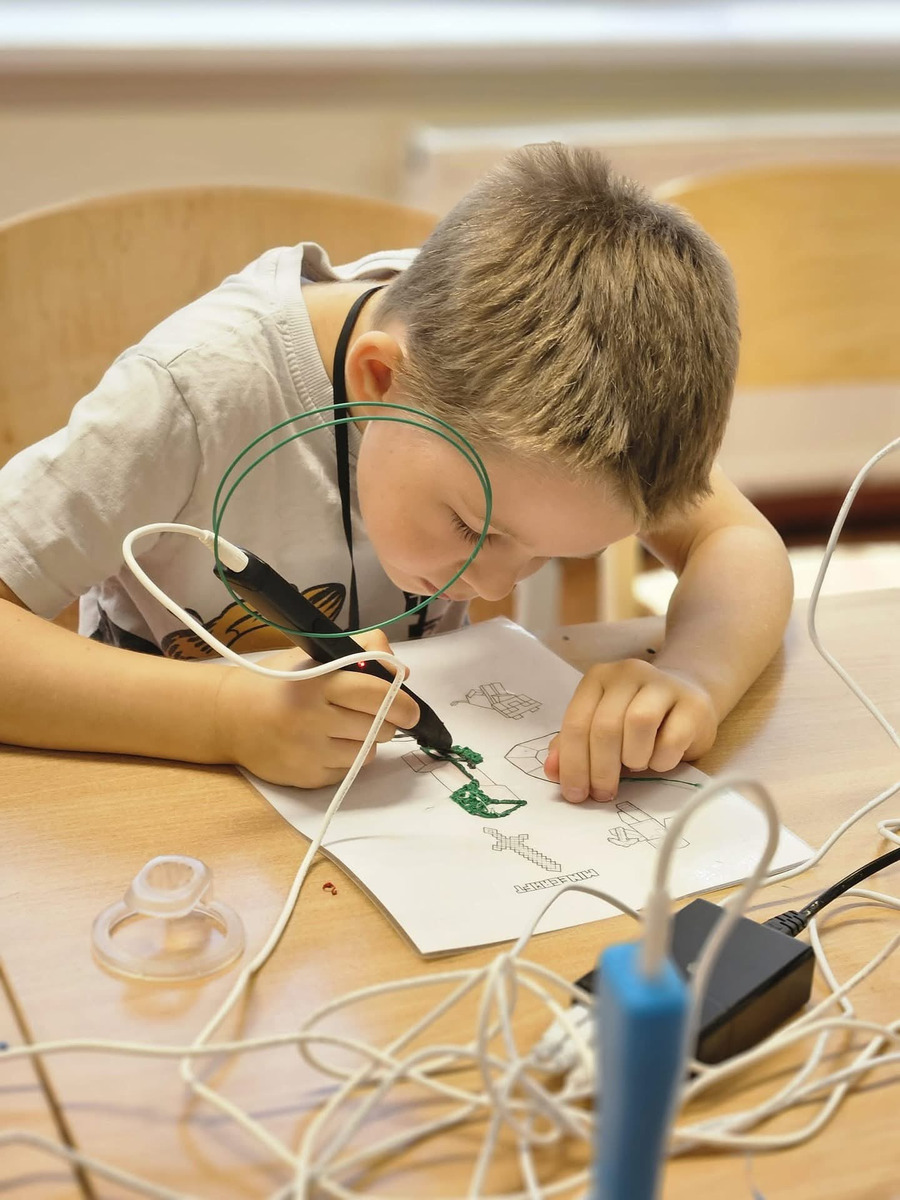
A child drawing with a 3D pen in a robotics class
Working with a 3D pen
Flexible

The programme adapts to the child, not the other way round

Join at any point in the school year

The teacher introduces new children to the basic skills they need, so there is no need to wait for the start of the school year.

Every theme at two levels

The same theme can be explored as a simple introduction or as a more in-depth task with an experiment and pair work.

A flexible order of classes

The teacher plans the year around the group, the calendar and the pace of learning, not a rigid schedule.

Locations and prices

Where we hold classes

Classes take place at your child's school or preschool, or at our premises in Riga. All prices include LEGO Education equipment, tablets, materials for 3D pen projects and teacher support throughout each class.

At schools €44 / month

Classes across Latvia

5–7 years · 35–40 minutes · once a week · Riga and regions across Latvia

Register
In Riga €47 / month

Domina Shopping centre

5–9 years · 50 minutes · once a week · groups by age and experience

Register
In Āgenskalns €47 / month

Meteors Children's Development Centre

5–9 years · 50 minutes · once a week · groups by age and experience

Register

No enrolment fee and no extra purchases. If your child's school or preschool isn't on the list, email us at info@inovacijuskola.lv and we'll look into opening a new group.

For parents

Good to know before the first class

What to bring

A good mood. Everything else is ready in the classroom.

Nothing to buy

We provide the LEGO sets, tablets and materials.

Right at the preschool

Classes take place at your child's preschool, so there's no need to travel.

Start at any time

Children can join in the middle of the school year too; the teacher helps them settle into the group's pace.

Groups by age

We form groups by age and skill level, so the tasks are just the right challenge.

Feedback

The teacher follows each child's progress and assesses what's going well and where more support is needed.

Reserve a place for your child in a robotics group

Registration takes about two minutes: choose a location, enter your contact details and we'll get in touch about an available place in a group.

Places in each group are limited